
Getting familiar with walking and cycling
As you get older, it’s important you get regular exercise to maintain your health. If walking and cycling are possible for you, they are both great ways to get about and keep fit and healthy at the same time. They’re also better for the environment and can save significant amounts of money when compared to driving.
Think about some of the trips you regularly make by car. Are they short distances? Would you be better off walking or cycling? You could also consider an e-bike if you need a little help covering more distance and getting up those hills!
Tips on walking
Take care when walking. We can become less active as we age, which can increase the risk of trips and falls. But the good news is, the more you walk, the more you reduce that risk!
Make sure you follow the road rules for pedestrians. Most of us know the rules, but it can still be tempting to take shortcuts and crossroads in unsafe places. Being a pedestrian comes with its own risks so it’s extra important to cross safely and avoid unsafe interactions with cars.
Make the journey joyful. Use online resources to find some nice places to walk. Transport Victoria has a variety of walking maps and information for each local government area in Victoria. Victoria Walks also provides details of great places to walk, with the ability to search by suburb or postcode. Remember to take your phone in case of an emergency.
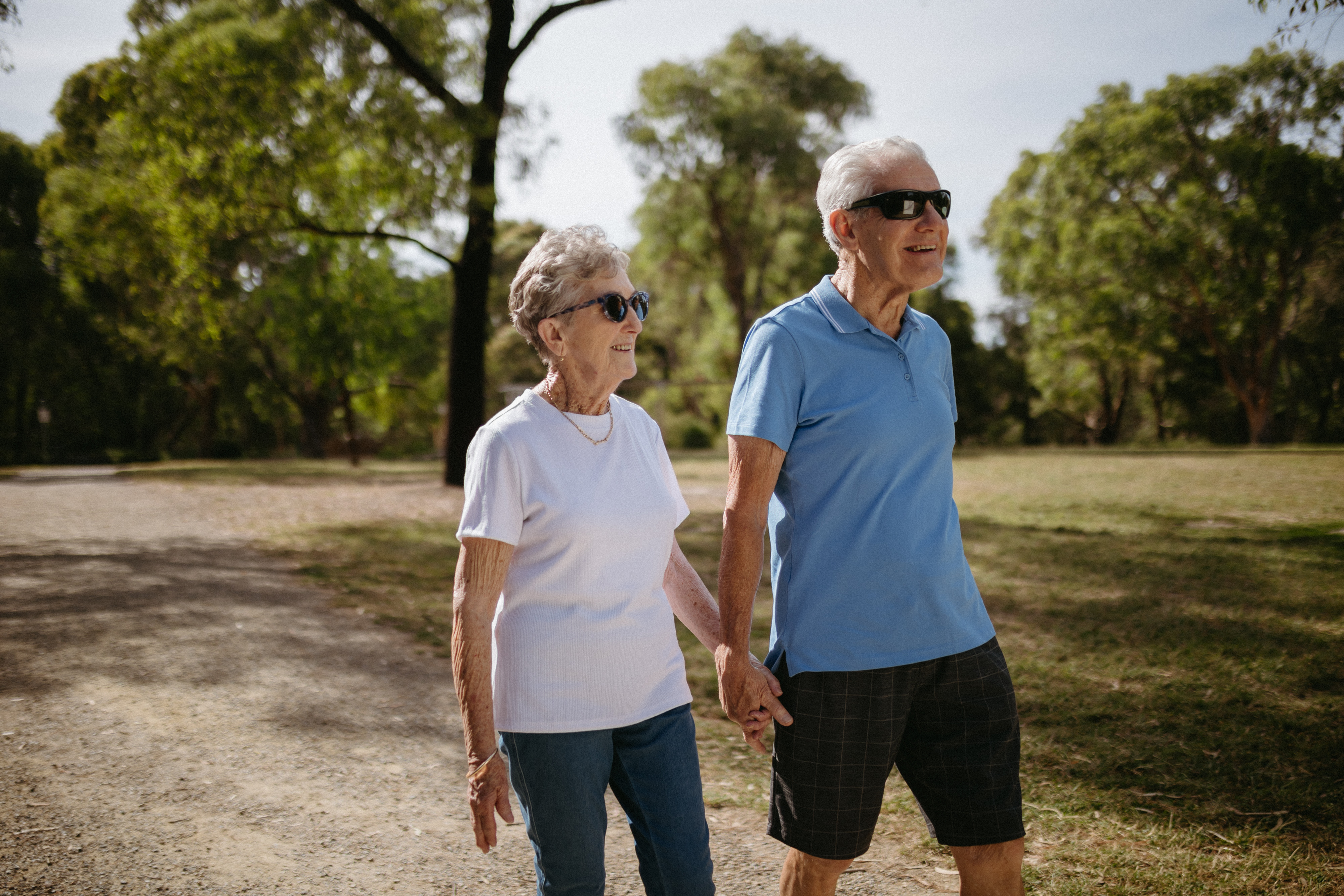
Take care when walking and make the journey joyful
Cycling and e-bikes
Tips on cycling and riding an e-bike
Even in your senior years, riding a bike might be, well, just like riding a bike! Although your skills could still be there, it’s a good idea to brush up on your knowledge of the road rules.
All the rules for drivers apply to cyclist too, but there are also some others:
You must wear an Australian standard bike helmet, preferably with slip-plane technology fitted: e.g. MIPS, KinetiCore, SPIN etc.
Your bike must have a red rear reflector, a bell and at least one working brake.
If riding at night or in low-light, your bike must also be fitted with front and rear lights. We recommend having the lights always turned on whilst riding.
Adults can only ride on footpaths if accompanying a child aged 12 years or under, or if riding with a young child in a seat attached to their bike.
When riding on paths, you must always give way to pedestrians and warn them when you’re approaching.
You need to give a hand signal when turning right. It’s a good idea to signal left turns as well, if it’s safe to do so.
You must not overtake a vehicle on the left if it’s signaling to turn.
You can take up a whole traffic lane if the road is narrow, you’re turning right, or travelling through a roundabout.
It is a good idea to have a mobile phone with you in case of tyre puncture, fall or emergency. However, just like driving a car, you can only use a mobile phone if it’s hands-free.
There are now networks of off-road paths as well as safer bike lanes across Melbourne and regional Victoria, so it really pays to plan if you’re going to ride. To help you out, Transport Victoria has online maps with bicycle routes for all areas of Victoria.
Transport Victoria also has lots of information for people new to cycling, including how to get started, training contacts, and information on groups and clubs you can ride with.
If you’re considering an e-bike, you won’t need a licence if the e-bike you choose has a power output not exceeding 200 watts, or is speed limited to 25km/h if it has a maximum power output of 250 watts. (If that was hard to make sense of, don’t worry! Retailers should be able to let you know the power capacity of any e-bike you’re interested in.)

